
Kulthida Krajangkul
“They injected chemicals into the mountaintops and let them flow downward. This is not an individual problem, but a societal problem at the community level caused by mining,” said Seng Li, a Kachin researcher, describing the impacts of rare earth mining.
Rare earth elements are strategic materials driving future technologies, including electric vehicles, high-performance batteries, smartphones, and advanced military systems. These minerals are considered the “heart” of the global energy transition and have become central to intensifying economic and geopolitical competition.
Aligning with this global trend, Thailand has entered the rare earth elements market through resource surveys and MOUs aimed at developing the mining industry. Information from the Department of Mineral Resources and other mining-related agencies indicates several potential sites along the western and northern Thailand–Myanmar border, including Mae Hong Son Province, which has increasingly been seen as a new economic opportunity for Thailand.
While Thailand sees this as an opportunity, Kachin State in Myanmar—located just across the border—is experiencing severe and potentially irreversible environmental and humanitarian consequences from extraction of rare earth elements. This crisis is driven by escalating global demand for rare earth elements.
People in Kachin State have emphasized the extreme difference between ordinary mines and rare earth extraction. Rare earth mining relies on “in-situ leeching” or the use of hazardous chemicals to leach minerals from soil layers. This method not only devastates local ecosystems but also undermines the traditional ways of life of Indigenous communities in the region.
The Irrawaddy River, the country’s main artery that sustains millions of people in Myanmar, is now facing unprecedented and uncontrollable chemical contamination.
The lesson from Kachin State is not distant from the Thai situation. It should serve as a crucial lesson for Thailand, who needs to consider thoroughly whether these “minerals of the future” are worth sacrificing the lives and environment of future generations.
Where Even Birds Cannot Survive: Chemical Contamination in the Mountains of Kachin State
“In the mountain area where we are working, there is nothing left anymore. Even tiny birds no longer exist. Every drop of liquid that we discharge into the mountain kills everything it touches. Nothing can survive here.”
A mine worker’s testimony, interviewed by Frontier media, reflects the image of the mountains in his homeland, which were once rich forests but have now been transformed into pale brown rare earth mining sites. The scars from drilling and the stains of chemicals have erased the ecosystem, leaving almost no trace of life.
Many white bags printed with Chinese characters are scattered across the area. The workers do not even understand what the words on the bags mean. They only know that their “duty” is to fill chemicals into the pipes at designated times.
Extraction Process: Injecting Chemicals from the Mountaintop and Letting Them Flow Downward
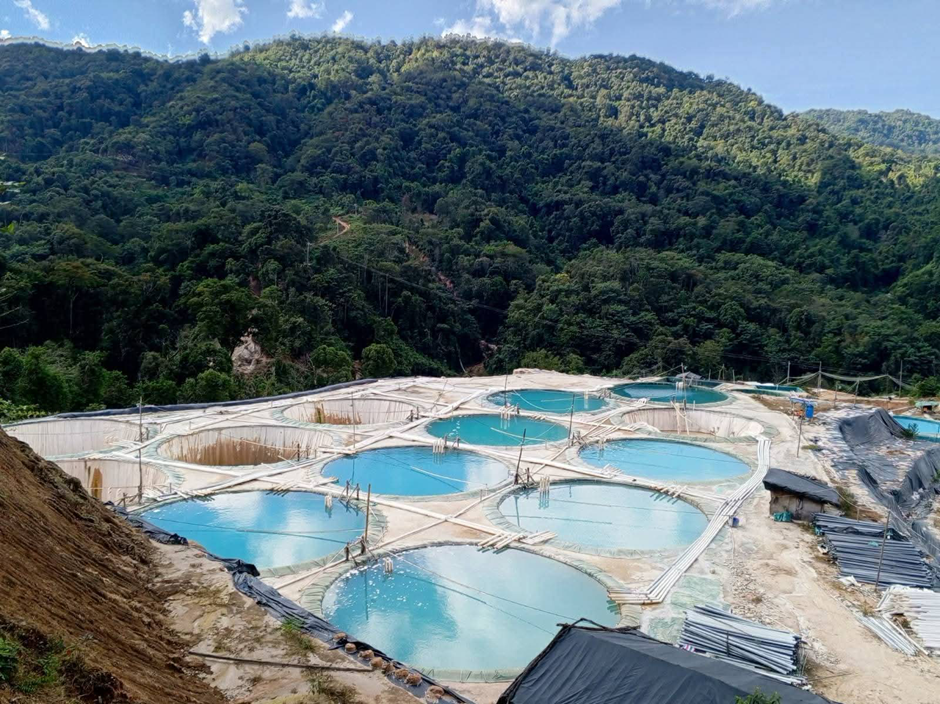
The mining process starts from the mountaintop. Ammonium nitrate is dissolved and then injected into the soil through a network of pipes installed in the mountain. As the solution flows down the hillside, it washes rare earth elements out of the soil layers before being collected in massive mud ponds.
From a bird’s-eye view, Kachin State appears covered with tens of thousands of large holes scattered across the mountain range like “permanent scars.” Countless chemical bags are left scattered and blended into the dry, loose soil. The soil has been thoroughly stripped of crucial minerals and is no longer capable of sustaining life.
After extracting the minerals, the mine discharges the polluted wastewater into natural water sources, some of which seeps into groundwater.
Global Witness reported that this contaminated water is threatening one of the world’s biodiversity hotspot regions, home to more than 1,500 endemic species. The region also contains one of the largest remaining tracts of intact rainforest in mainland Southeast Asia
“Everything is contaminated. You cannot grow rice here while there is another mine on the other side,” said Shane (pseudonym), emphasizing that land, water, and soil are all interconnected. Once mining begins, pollution spreads rapidly across the area.”
Many villages were not destroyed “voluntarily,” but rather “without a choice.” Even if the mine is located on nearby land, the traditional way of life can collapse across the entire area.
From land-based livelihoods to mine-based livelihoods
Before the mining began, these mountains were the foundation of life and livelihood directly connected to the land. Indigenous communities in Kachin State practiced rotational farming, similar to Karen communities in Thailand. They grew rice, corn, and legumes for household consumption. Ginger, turmeric, cardamom, and makhwaen (Zanthoxylum limonella Alston) were well-known herbs and key export products to China, especially to neighboring Yunnan Province.
When rare earth mines were introduced, everything changed.
“When the mines started operating, China stopped buying crops from this area due to concerns about toxins in the products,” said Seng Li.
As crops could no longer be sold and land was confiscated or contaminated, many communities were forced to change their “status” from landowners to laborers.
Seng Li explained that the confiscation or contamination of land led to the complete loss of villagers’ traditional livelihoods, as they could no longer sustain agricultural life.
“After the land was taken by the mines, they became laborers in the mines. Their lives completely changed from landowners to laborers.”
Although some families tried to continue their agricultural livelihoods, they eventually gave up because there was no market demand for their crops. Many had no choice but to abandon agriculture and rely on income from the mines.
The once-peaceful mountains became densely populated towns with migrants from across Myanmar. Some opened beer shops, liquor stores, or small businesses to serve the mine laborers. The economy shifted from subsistence agriculture to a service economy dependent on mining.
However, the impact was not limited to livelihoods. Seng Li mentioned that that relationship and family problems became widespread. Many workers entered relationships with local women without marriage registration. When women became pregnant, the workers often left the area, leaving them to raise the children alone.
At the family level, communal rotational farming practices became impossible. Mining income became the only option, and in many cases husbands and wives could not work in the same mining site, forcing families apart and creating additional tension within families.
“All of these problems are not individual issues but community-level problems that occur alongside the mines,” said Seng Li.
The Arrival of the Dragon’s Mine: Resources, Geography, and Extrajudicial Power
Kachin State was not “accidentally” chosen by China for mining. It is a strategic location where all conditions align: resources, geography, and extrajudicial power.
Kachin State is situated along the China–Myanmar border, near Yunnan Province, where rare earth mining has been established for many years. This proximity facilitates the transportation of minerals, the movement of labor, and cross-border capital flows.
Looking at the timeline, rare earth mining in Kachin State began around 2010 in areas under the control of the Kachin Independence Organization (KIO), an ethnic armed organization that holds power in the China–Myanmar borderlands. In this first phase, mining activities took place outside the control of Myanmar’s central government.
In 2014, the industry expanded into areas controlled by the Border Guard Force (BGF), an armed group operating in border areas under the authority of the Myanmar central government.
A major turning point occurred in 2015, when the Chinese government began cracking down on domestic rare earth mines, particularly in Yunnan Province. Many mines were shut down, but global demand did not decline. Conversely, this domestic “crackdown” pushed rare earth mining across the border, with Kachin State becoming a new destination for these mines.
After the coup d’état in Myanmar in 2021, the ensuing civil war further enabled the unchecked expansion of mining activities.
Research from the Shan Foundation found that Kachin State currently has more than 5,000 mineral leaching wells and at least 400 mines, covering a combined area nearly twice the size of Singapore. Landscapes that were once forests, mountains, and headwaters have been transformed into extraction zones feeding global industry at the expense of local communities and the environment.
Rare Earth Elements, the “Nation-Building Project,” and the Authority without Sanctions.
The reason why some groups of people in Kachin do not openly resist the mines is not straightforward. It is deeply embedded in the history of armed struggle, nation-building projects, and the living conditions of marginalized communities
For some, rare earth mining is linked to Kachin State’s own “nation-building project.” It is framed as a pathway toward economic independence and political autonomy. Hence, questioning the project is not easy.
“When mining is connected to the nation-building project, some people choose to accept it—or at least not resist,” explained Seng Li. Some are aware of the impacts, but speaking out may be perceived as questioning the broader nation-building agenda.
Concurrently, the “form of power” determines how land is appropriated and the extent to which people have the right to resist.
In the initial phase, negotiations were conducted with the communities in KIO area. Although the power imbalance was evident, there was still some space for dialogue. In contrast, in areas controlled by the Border Guard Force (BGF), land was taken through direct force.
“In BGF areas, they confiscated villagers’ land by force… If you protest, you will be arrested, imprisoned, tortured, or something worse may happen. That is why nobody dares to speak out,” Seng Li said.
Under such fear, many villagers accepted compensation, even knowing it was unjust. The situation continued until 2017, when the mining areas returned to KIO control. As the mines began to receive greater scrutiny, local powers shifted their strategy from overt force to “negotiated land purchases” at higher prices, making the transactions appear more like contractual agreements than coercion.
“Since 2017, they changed their method… They offer very high prices to make it look like a negotiation rather than coercion,” Seng Li explained, describing the land acquisition strategies of capital holders and elites in Kachin State.
However, the violence has not disappeared. The right to protest still depends on who control the area.
Shane (pseudonym) gave the example of Humbaba, a KIO-controlled area, where villagers openly protested the mines due to what he described as “memories of past trauma.” In 2011, a coal mine had operated in the area, promising development. However, when the mine ceased operations, it left behind only pollution and health impacts.
“After the coal mine ended, the villagers gained nothing but pollution,” Shane stated.
When rare earth mining was proposed in the same valley, suspicion immediately spiked. Many communities mobilized in opposition. Ultimately, as resistance grew stronger and religious networks and civil society organizations provided support, the KIO halted mining operations in areas where communities refused consent.
Even in some areas where communities “accepted” mining, this does not mean they were unaware of the impacts. Rather, poverty, conflict, and displacement have narrowed their choices. This is especially true for those who have lived in internally displaced persons (IDP) camps since armed clashes erupted in 2011.
“For some communities, mining is not a matter of choice. It is the only means of survival they can see,” Shane said.
Life in the Mines: Risky work for Locals, Higer Pay for Chinese
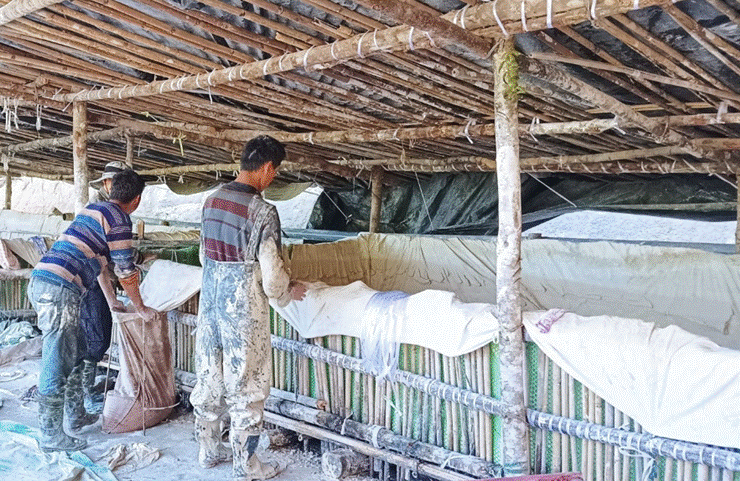
As people become landless, mines have turned into their source of “work.” Yet within the same mining sites, labor is clearly stratified by nationality and class.
Seng Li and Shane explained that higher-level positions – technicians, experts and administrative roles—are reserved for Chinese nationals. Meanwhile, most laborers are Myanmar nationals, who are tasked with transporting bags of chemicals, mixing solutions, and scooping mineral sediment, equipped only with rubber gloves and boots for protection.
Many workers have complained of coughing, numbness, skin conditions, and kidney problems. The health risks associated with the chemicals used in the mines are widely known.
Global Witness shared interviews with the wives and mothers of two mine workers who died shortly after being released from work. Both reportedly suffered severe gastrointestinal symptoms, including internal organ rupture and fluid accumulation in the abdomen. Their families believe the deaths were related to chemical exposure, although no official diagnosis was made.
“His organs are completely decomposed… If they explained about this risk, who would want to work there?”
What most starkly reinforces inequality is the “wage wall.”
“Local workers earn less than 3,000 yuan (approximately 13,000 baht), while Chinese workers start at 8,000 yuan (around 35,000 baht) per month.”
Seng Li further explained that employment arrangements are highly insecure. Local workers are typically hired on a daily basis without benefits. If they fall ill and cannot work, their income immediately drops to zero. The payment system is also exploitative, with wages often delayed for two to three months.
“In some mines, they do not pay wages at all. They pressure workers until they become frustrated and resign on their own, so employers can avoid paying the outstanding wages,” Seng Li said.
For women workers, the situation is even worse. They face risks of sexual harassment, which frequently go unpunished.
“There have been many cases of sexual harassment. If a woman refuses to submit or have a relationship with the perpetrator, she may be dismissed with no explaination,” Seng Li stated.
A Message from Northern Myanmar to Northern Thailand
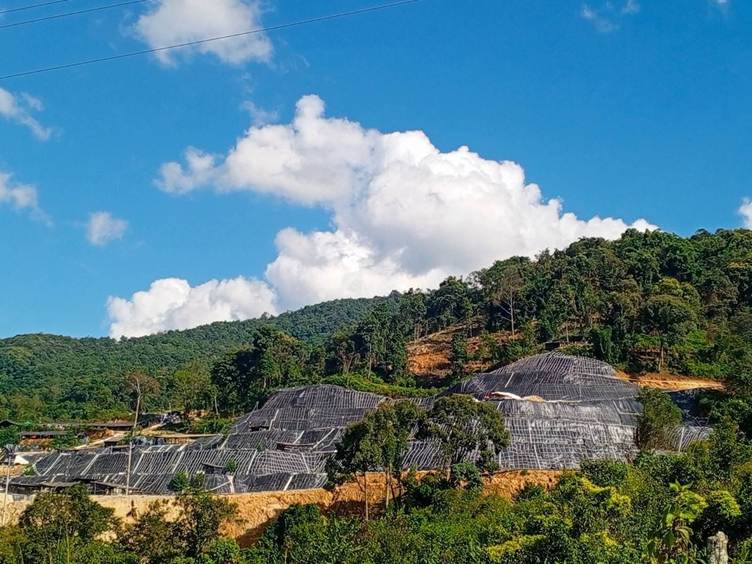
These toxic chemicals are seeping into streams that villagers once relied on for fishing and drinking water. The latest water sampling reported by Global Witness found that many streams in mining areas in Kachin State have high acidity levels and elevated concentrations of arsenic.
The critical point is that these mines are not located just anywhere. They are situated at the watershed area of the Irrawaddy River—the longest river in Myanmar, sustaining millions of people. The Irrawaddy originates from two major northern rivers, the Maykha and the Malikha. A large number of mines are concentrated in the Maykha basin, which flows directly into the Irrawaddy. This means that contamination at the source can flow downstream and affect vast populations.
What further exacerbates the situation is the “limitation of scrutinization” within Myanmar itself. Seng Li explained that the country remains in turmoil. Civil society organizations face pressure from both ethnic armed organizations and the Myanmar military, limiting their ability to operate freely. They also lack the equipment, technology, and laboratory capacity to conduct regular water quality testing. As a result, it is difficult to raise awareness because no clear monitoring system exists to consistently confirm and update the facts.
On 27 January 2026, local media in Kachin State reported that the Kachin Independence Organization (KIO) had reached an agreement with a Chinese company to proceed with rare earth mining in the Chipwi and Pangwa areas under its control. The project reportedly pledged to adopt drilling methods that would reduce environmental impacts and improve site inspections compared to previous operations.
However, voices from workers and local residents indicate that, in practice, land clearing, soil testing, and the expansion of mining plots continue. Environmental restoration has yet to materialize in any concrete form.
. Within a context where mining revenues are said to be used for community development—and where all extracted minerals continue to be exported to China—this situation reflects the KIO’s attempt to balance resource income with environmental protection. Nevertheless, serious questions remain regarding the oversight and actual impacts on the ground.
“That area can no longer grow anything… It is not just one site that has been destroyed, but an entire region.”
Restoration of the Contaminated Land
The process of injecting chemical solutions into the ground through numerous boreholes not only destroys topsoil but also seeps deep into underground water sources, contaminating them.
Althought official documents state that the company must restore the environment after the mines close. In reality, Seng Li pointed that Most of Chinese companies did not comply, they left mines untouched and opened in the new place to began this vicious cycle again.
The problem, therefore, is not only the “mining companies” themselves, but also the failure to enforce environmental regulations. The inability to hold operators accountable for restoration has resulted in prolonged and severe damage, with the burden falling entirely on communities that must continue living with degraded land and contaminated water.
Seng Li recounted that what he observed in Thailand made him feel “jealous in a good way.” After observing the response to the Kok River situation in Chiang Rai, he noted that Thai civil society is relatively well organized, equipped with monitoring tools, and able to update information continuously—even in real time. In contrast, such systems do not exist in Kachin State. Environmental activism must often be conducted in secrecy, as open action may result in arrest, torture, or even death.
“It is an enormous challenge for us.”
Finally, Seng Li warned Thailand about signing the rare earth MOU.
“Mining is hazardous and highly damaging to the environment. The Thai government must consider this issue carefully. Otherwise, it may affect future generations.”
The impacts of mining do not end when extraction stops. Contaminated soil remains. Both Kachin State and northern Thailand are agricultural regions; once land is polluted with toxic chemicals, returning to rice cultivation or farming becomes nearly impossible.
“This is not merely a temporary loss of income, but a permanent loss of livelihood.”


